Probe depths matched to root zones; alerts fire when bands exit crop-stage targets.
Smart Farming
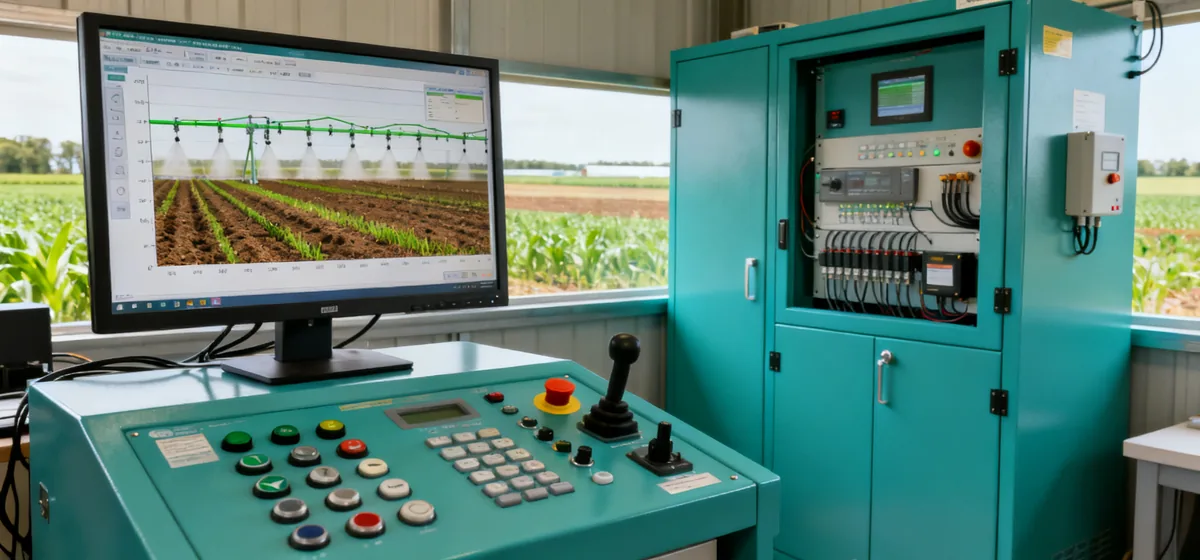
Sensors, automation and data-driven irrigation operations
Netafim smart-farming workflows connect soil moisture probes, VFD pumps, fertigation dosing and irrigation controllers so schedules respond to field conditions instead of fixed calendar guesses.
Operations Dashboard
Signals growers actually use during irrigation season
Controller logs compare actual minutes to the hydraulic schedule for each block.
Injector feedback confirms nutrient pulses landed during open-valve windows.
Backwash triggers before emitters see silt loads that flatten uniformity.
Schedules prefer tariff valleys while respecting minimum pressure for laterals.
Stuck valve and low-pressure tickets tracked to dealer or farm crew response.
Technical briefs for automation buyers
Request these packs with your inquiry—files are prepared per crop and controller family, not as generic marketing PDFs.
-
Sensor placement checklist
Probe depth, lateral offset and wireless gateway notes for orchards and open fields.
-
Controller I/O planning sheet
Valve counts, fertigation interlocks, filter backwash and VFD start/stop wiring map.
-
Drip vs pivot automation comparison
Labor, energy and sensor density differences when upgrading either architecture.
Smart-farming rollout sequence
-
Baseline hydraulics
Stabilize drip laterals, filtration and pressure before adding sensors. Automation cannot fix undersized pumps or plugged emitters.
-
Instrument critical blocks
Install soil moisture and pressure sensors on the blocks that drive most yield risk or water cost.
-
Controller & fertigation interlocks
Wire valve groups, injectors and VFD limits; train operators on alarm ownership.
-
Season review
Compare runtime, water m³ and fertigation pulses to crop outcomes; adjust thresholds for the next cycle.
Operating limits before you automate
- Hydraulics first: Controllers cannot correct undersized pumps, airlocked laterals or filters that pass silt into 0.2–1.0 L/h emitters.
- Connectivity: Cellular or radio gateways need line-of-sight and a maintenance owner; orphaned sensors become noise after one season.
- Fertigation chemistry: Aggressive acid recipes need compatible injectors and flush protocols; automation does not remove material compatibility checks.
- Coverage reality: Target schedules reference coverage area (ha) and flow rate (m³/h) measured at the headworks, not brochure maximums.
How buyers can verify before purchase
Request a free emitter and filter trial kit sized to your source water, then run a 7–14 day pressure and uniformity log on one valve group. Application engineers review the log against VFD pump curves and fertigation pulse timing, and return a written readiness score for sensor density and controller I/O—not a subscription pitch.
Request a smart-farming readiness audit
We will score your current drip or micro sprinkler network for sensor density, controller I/O and dealer support—not pitch a black-box subscription.
Request Smart Farming Audit